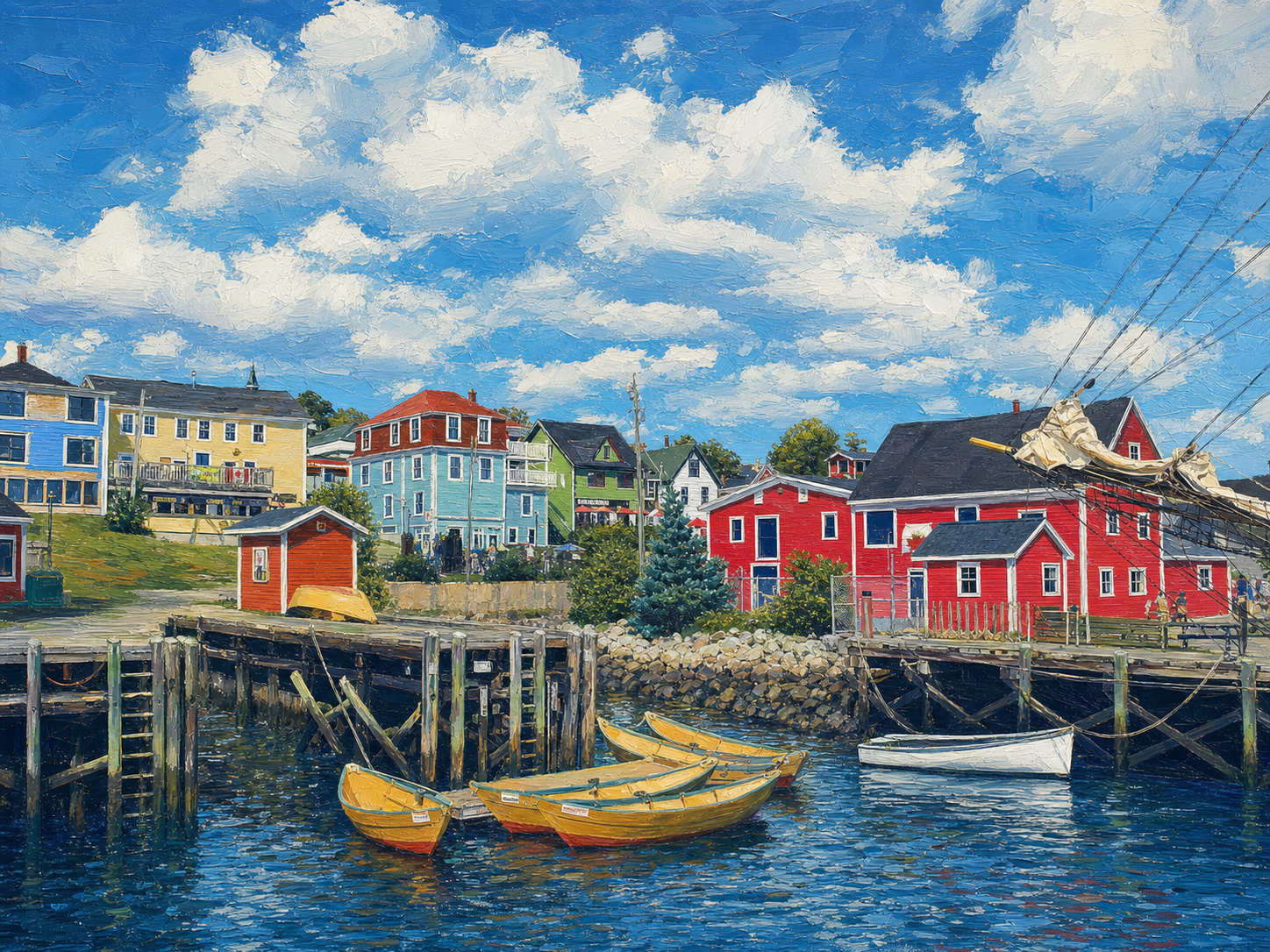
Imagine a tour guide waving you closer at the waterfront, waiting for the gulls to finish their meeting, then pointing up the hill. This is the tale they might tell.
About 7 minutes. Your device supplies the narrator's voice.
Welcome to Lunenburg. Let us tell you a story. Imagine a tour guide waving you closer at the waterfront, waiting for the gulls to finish their meeting, then pointing up the hill. This is the tale they might tell. The shore already had a name Before there was a Lunenburg, before a surveyor drew a single straight street, this coast was part of Mi'kma'ki, the traditional and ancestral homeland of the Mi'kmaq. The harbour was known as E'se'katik, and Mi'kmaq families knew these waters as living places of travel, gathering, fishing and relationship. Acadian families later called the community Mirligueche and lived here alongside Mi'kmaq neighbours. So our story does not begin with an empty map in 1753. It begins with people, language and a coastline that already held memory. If the harbour could talk, it would probably ask us to stop interrupting and listen for a change. A ruler, a steep slope and 1,400 new neighbours In 1753, Britain established a planned colonial settlement here and brought more than 1,400 mainly German, Swiss and Montbeliardian Protestant settlers from Europe. Surveyor Charles Morris imposed a tidy grid of streets and lots across a very untidy hill. The plan connected harbour, homes, public spaces and commerce, but it was also part of a colonial project that displaced and transformed lives already rooted here. That truth belongs in the picture. The streets still climb as Morris drew them, with almost heroic indifference to tired legs. Lunenburg's first practical lesson is therefore timeless: history is complicated, the view is worth it, and downhill is a direction best saved for dessert. Palisades, raids and people caught in the middle The eighteenth century did not arrive quietly. Rival British and French empires carried their wars across the Atlantic, while Mi'kmaq communities defended their homeland and Acadian families faced upheaval and expulsion. Early Lunenburg was ringed by blockhouses and a palisade. Settlers rebelled over provisions in 1753, raids struck in 1756 and 1758, American privateers attacked in 1782, and the town was fortified again during the War of 1812. These were not storybook battles with simple heroes and villains. They were collisions of empire, survival, loyalty, fear and resistance. The colourful houses came later. First came people trying to endure a world that kept changing the rules, usually without asking them. Cod, courage and the schooner on the dime Then the sea became Lunenburg's great stage. Families built vessels, sailed to distant banks, cured cod for overseas markets and learned that every safe return was worth celebrating. At Smith and Rhuland Shipyard, the original Bluenose slid into the harbour on 26 March 1921. She was a working Grand Banks fishing schooner, but under Captain Angus Walters she also became an undefeated racing champion and the Queen of the North Atlantic. Her image has appeared on Canada's ten-cent coin since 1937. Bluenose II followed in 1963 and still sails as Nova Scotia's ambassador. If anyone tells you she is “just a boat,” smile kindly. Canadians put her on money, so the argument has already been settled. The castle on the hill and the people below Look up and you will see the Lunenburg Academy watching from Gallows Hill like a grand Victorian relative who notices everything. Designed in 1893, completed in 1895 and used for education until 2012, it is Nova Scotia's only intact nineteenth-century Academy building. Lunenburg's real monument, though, is its people: shipbuilder and architect Solomon Morash; Captain Walters and his crew; Pearl Oxner, remembered as “Mrs. Music”; artist Earl Bailly, who painted with his mouth after polio took the use of his limbs; blues legend Dutch Mason; and Brigadier-General Sheila Hellstrom, a pioneering leader in the Royal Canadian Air Force. Apparently one small town was not told it had to choose only one talent. Not frozen in time, but carrying it forward In 1995, UNESCO placed Old Town Lunenburg on the World Heritage List as the best surviving example of a planned British colonial settlement in North America. The original grid remains. Wooden homes and public buildings still gather closely along the streets. The waterfront still works, the foundry still makes things, boats still come and go, and neighbours still argue cheerfully about the best chowder. This is not a museum town sealed behind glass. It is a community carrying difficult history, sea-going skill and bright imagination into a new century. To be a Lunenburger for a day, walk slowly, look up, respect the working harbour, ask a good question and let the wind rearrange your hair. Congratulations. You fit right in. Come as a visitor. Leave a little bit Lunenburger. The streets are ready, the harbour is waiting and the gulls have finally adjourned their meeting. Start at the Academy, follow the hill to the water and see which part of the story finds you first.
Before there was a Lunenburg, before a surveyor drew a single straight street, this coast was part of Mi'kma'ki, the traditional and ancestral homeland of the Mi'kmaq. The harbour was known as E'se'katik, and Mi'kmaq families knew these waters as living places of travel, gathering, fishing and relationship. Acadian families later called the community Mirligueche and lived here alongside Mi'kmaq neighbours. So our story does not begin with an empty map in 1753. It begins with people, language and a coastline that already held memory. If the harbour could talk, it would probably ask us to stop interrupting and listen for a change.
In 1753, Britain established a planned colonial settlement here and brought more than 1,400 mainly German, Swiss and Montbeliardian Protestant settlers from Europe. Surveyor Charles Morris imposed a tidy grid of streets and lots across a very untidy hill. The plan connected harbour, homes, public spaces and commerce, but it was also part of a colonial project that displaced and transformed lives already rooted here. That truth belongs in the picture. The streets still climb as Morris drew them, with almost heroic indifference to tired legs. Lunenburg's first practical lesson is therefore timeless: history is complicated, the view is worth it, and downhill is a direction best saved for dessert.
The eighteenth century did not arrive quietly. Rival British and French empires carried their wars across the Atlantic, while Mi'kmaq communities defended their homeland and Acadian families faced upheaval and expulsion. Early Lunenburg was ringed by blockhouses and a palisade. Settlers rebelled over provisions in 1753, raids struck in 1756 and 1758, American privateers attacked in 1782, and the town was fortified again during the War of 1812. These were not storybook battles with simple heroes and villains. They were collisions of empire, survival, loyalty, fear and resistance. The colourful houses came later. First came people trying to endure a world that kept changing the rules, usually without asking them.
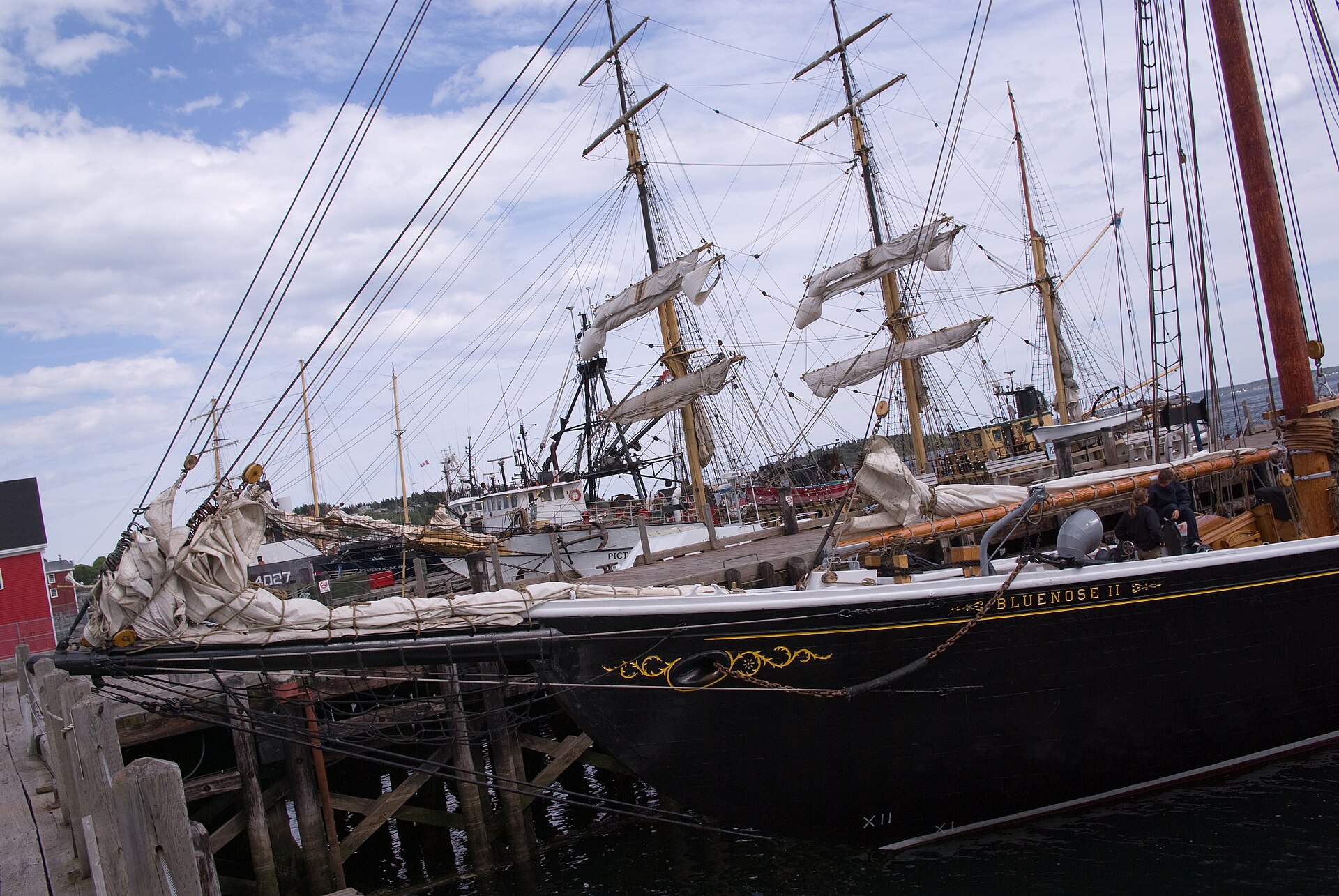
Then the sea became Lunenburg's great stage. Families built vessels, sailed to distant banks, cured cod for overseas markets and learned that every safe return was worth celebrating. At Smith and Rhuland Shipyard, the original Bluenose slid into the harbour on 26 March 1921. She was a working Grand Banks fishing schooner, but under Captain Angus Walters she also became an undefeated racing champion and the Queen of the North Atlantic. Her image has appeared on Canada's ten-cent coin since 1937. Bluenose II followed in 1963 and still sails as Nova Scotia's ambassador. If anyone tells you she is “just a boat,” smile kindly. Canadians put her on money, so the argument has already been settled.
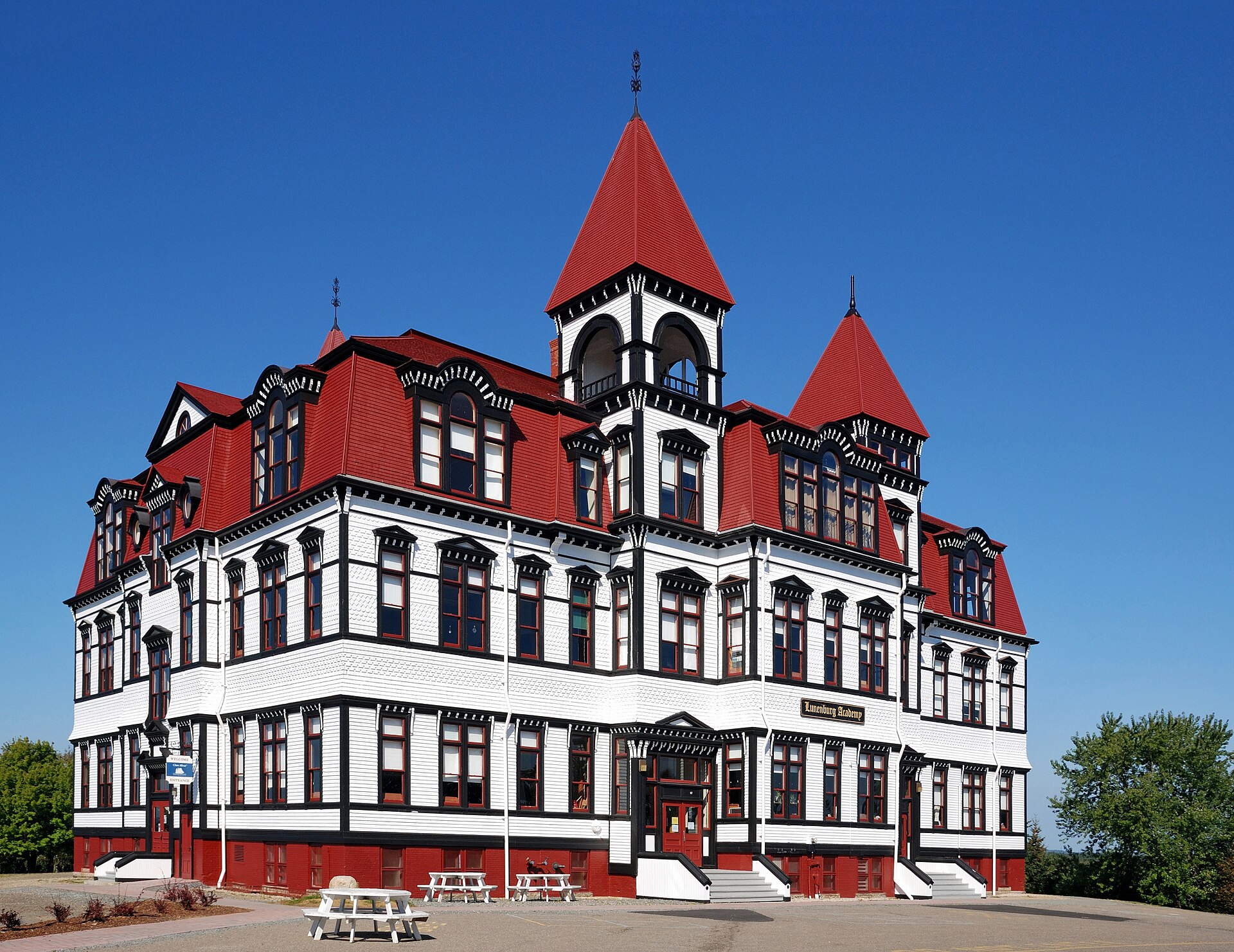
Look up and you will see the Lunenburg Academy watching from Gallows Hill like a grand Victorian relative who notices everything. Designed in 1893, completed in 1895 and used for education until 2012, it is Nova Scotia's only intact nineteenth-century Academy building. Lunenburg's real monument, though, is its people: shipbuilder and architect Solomon Morash; Captain Walters and his crew; Pearl Oxner, remembered as “Mrs. Music”; artist Earl Bailly, who painted with his mouth after polio took the use of his limbs; blues legend Dutch Mason; and Brigadier-General Sheila Hellstrom, a pioneering leader in the Royal Canadian Air Force. Apparently one small town was not told it had to choose only one talent.
In 1995, UNESCO placed Old Town Lunenburg on the World Heritage List as the best surviving example of a planned British colonial settlement in North America. The original grid remains. Wooden homes and public buildings still gather closely along the streets. The waterfront still works, the foundry still makes things, boats still come and go, and neighbours still argue cheerfully about the best chowder. This is not a museum town sealed behind glass. It is a community carrying difficult history, sea-going skill and bright imagination into a new century. To be a Lunenburger for a day, walk slowly, look up, respect the working harbour, ask a good question and let the wind rearrange your hair. Congratulations. You fit right in.
This independent welcome was written from the linked historical sources. It honours Lunenburg's wonder without hiding the harder chapters of its past.
YOUR TURN IN THE STORY
Come as a visitor. Leave a little bit Lunenburger.
The streets are ready, the harbour is waiting and the gulls have finally adjourned their meeting. Start at the Academy, follow the hill to the water and see which part of the story finds you first.